

Why Every Industry Is Under Pressure to Switch
From the UK Plastic Packaging Tax to the EU's single-use plastic ban, the case for switching to sustainable packaging has never been stronger. Here's a quick, scannable look at what's changed, what's coming, and what it means for your business.
Key Takeaways
- UK Plastic Packaging Tax: £228.82 per tonne (April 2026), rising and tightening further from April 2027
- Paper packaging: fully exempt from the tax, at £0 per tonne
- Four regulations to know: Plastic Packaging Tax, EPR, EU PPWR, and the UK Green Claims Code
- Hardest hit sectors: beverages, QSR, airlines, retail, and events
- Bottom line: switching to paper-based packaging cuts tax, cuts admin, and meets rising customer expectations
1. The UK Plastic Packaging Tax
Since April 2022, the UK has taxed plastic packaging that contains less than 30% recycled content.
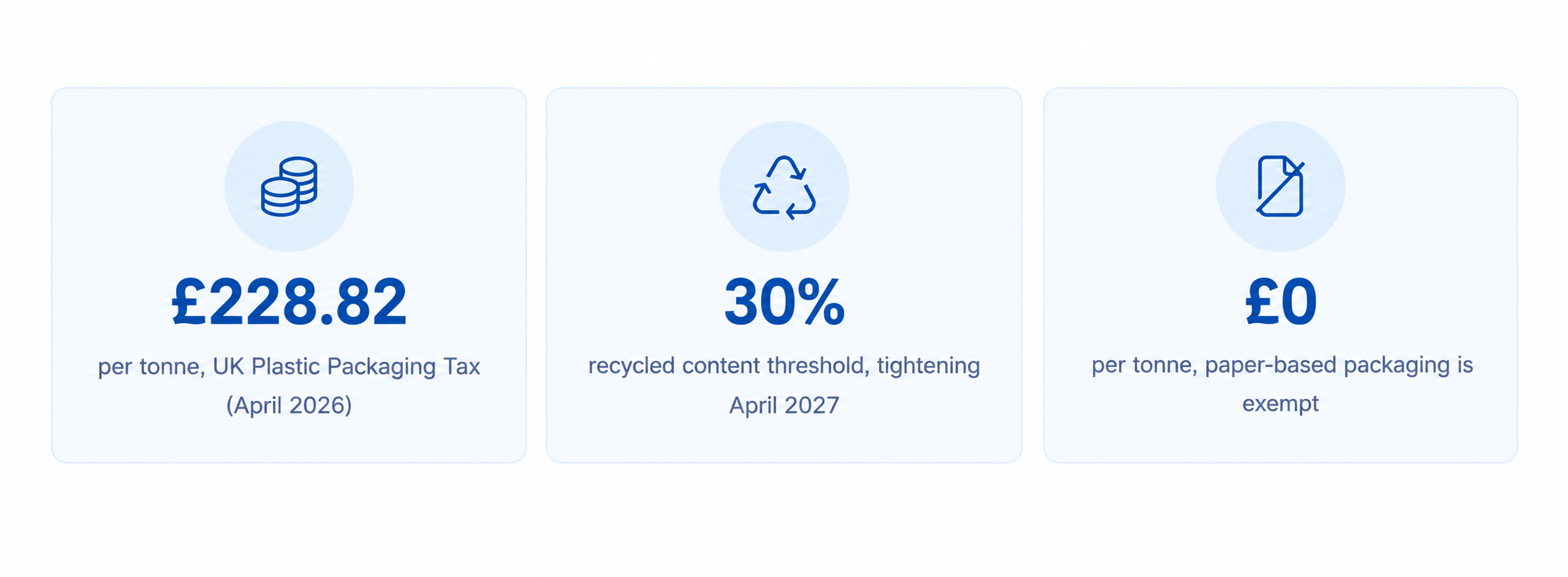
- £228.82 per tonne — UK Plastic Packaging Tax (April 2026)
- 30% recycled content threshold, tightening April 2027
- £0 per tonne — paper-based packaging is exempt
- From April 2027, only post-consumer recyclate counts toward the 30% threshold
- Pre-consumer offcuts and manufacturing waste will no longer qualify
- More businesses will end up paying the full tax rate as a result
- Paper-based packaging (straws, cutlery, cups, retail packaging) stays fully exempt
2. Four regulations businesses need to know
The Plastic Packaging Tax is just one part of the picture. Here's what else applies:
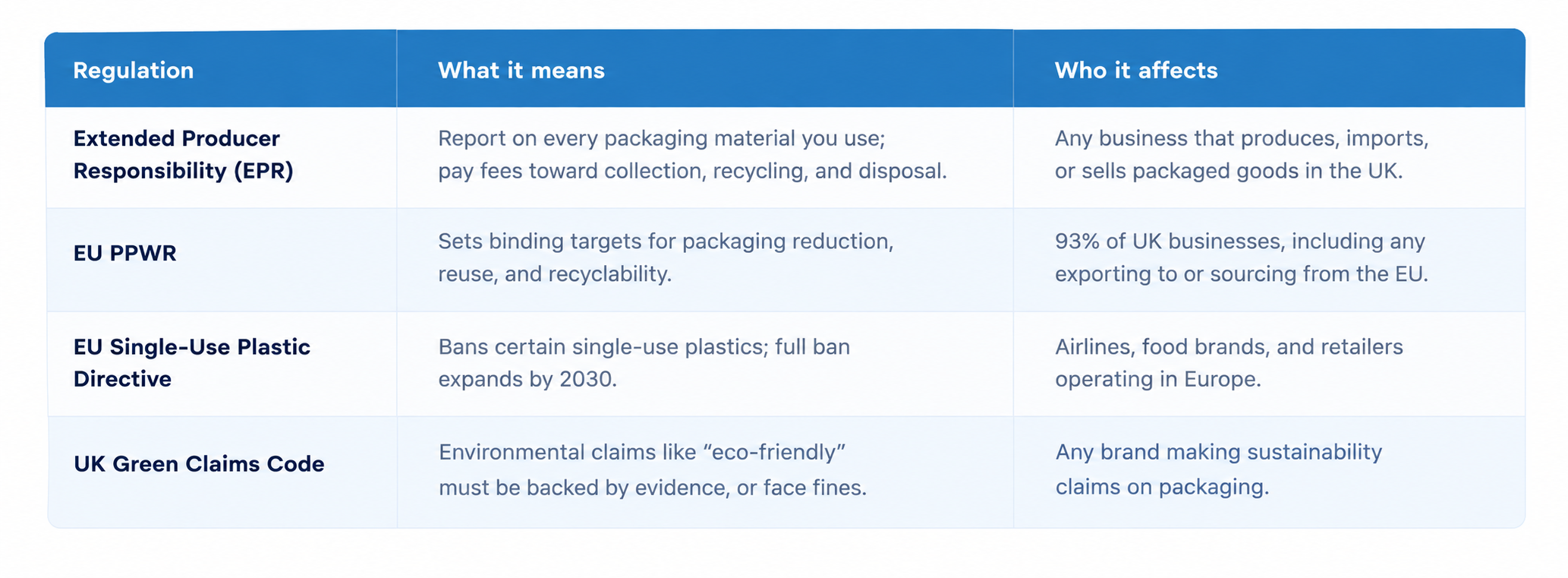
Paper-based packaging carries lower EPR fees, simpler reporting, and certified evidence (FSC/PEFC) that satisfies the Green Claims Code.
3. Pressure by industry
The rules above apply broadly, but each industry feels them differently:
IndustryMain pressureWhat's neededBeveragesThe straw is often the last plastic part left in sealed drinks (juice, dairy)Aseptic paper straws that keep food safe without plasticQSRDifferent sustainability rules in every country of operationOne supplier for straws, cutlery, cups and wrap to a single standardAirlines4M tonnes of cabin waste in 2025, 13% of it plasticLightweight, compact, food-safe packaging that clears the 2030 EU banRetailEPR fees, Deposit Return Schemes, and PPWR all at onceCertified packaging with documented proof for the Green Claims CodeEvents & sportsHigh-volume, highly visible single-use waste in short windowsConsistent, compliant packaging across every stand and stall
4. What happens if you don't switch
The cost of inaction:
- Rising costs: the Plastic Packaging Tax increases yearly, and the 2027 threshold change catches more businesses
- More paperwork: EPR reporting, PPWR obligations, and Green Claims Code evidence all add admin
- Customer risk: shoppers, especially younger ones, favour brands that can prove they're cutting plastic
Paper-based packaging avoids all three: £0 Plastic Packaging Tax, simpler EPR reporting, and a genuine sustainability story backed by FSC/PEFC certification.
Frequently Asked Questions
How much is the UK Plastic Packaging Tax in 2026?
As of April 2026, the UK Plastic Packaging Tax is £228.82 per tonne on plastic packaging containing less than 30% recycled plastic. From April 2027, only post-consumer recyclate will count toward the 30% threshold. Paper-based packaging is fully exempt from this tax.
What is Extended Producer Responsibility (EPR) for packaging?
Extended Producer Responsibility requires businesses that produce, import, or sell packaged goods to report on all packaging materials they handle and pay fees toward collection, recycling, and disposal. In the UK, businesses using certified paper-based packaging benefit from lower fees and simpler reporting than those using plastic.
Does the UK Plastic Packaging Tax apply to paper packaging?
No. The UK Plastic Packaging Tax applies only to plastic packaging with less than 30% recycled plastic. Paper-based alternatives, including paper straws, paper cutlery, and paper cups, are fully exempt. That makes them both a sustainability win and a direct cost saving.