
That trade-off is fading. There is now a paper food box that keeps meals fresh for seven to ten days, holds its shape against oily sauces, and still tells the right story on the shelf.
What is MAP food packaging?
MAP stands for Modified Atmosphere Packaging. The ordinary air inside a sealed pack is replaced with a protective mix of gases, mainly carbon dioxide, nitrogen and oxygen, which slows spoilage and keeps food fresh for longer, with no preservatives. For food brands, it is one of the most useful ways to balance a longer shelf life with less plastic.
How it works: CO₂, N₂ and O₂
The freshness comes down to three gases, each with a job to do.
- Carbon dioxide (CO₂). The main workhorse. It slows the bacteria and molds that spoil food, so more of it usually means a longer shelf life.
- Nitrogen (N₂). The filler. It takes the place of oxygen and keeps the pack from collapsing, holding the shape of the box without reacting with the food.
- Oxygen (O₂). Usually the one to cut back. Oxygen is what helps food turn stale and lose its colour.
The balance is tuned to the food, so a leafy salad, a cooked meal and fresh meat each get their own blend. Once the box is flushed with the mix and sealed, that protective atmosphere holds until it is opened.
Benefits of MAP for the food industry
For food businesses, MAP is about more than freshness on the plate. It changes the numbers across the whole supply chain.
- Longer shelf life. A chilled meal can go from two to three days up to seven to ten, widening the window to sell it.
- Less food waste. More days on shelf means fewer products thrown away, both in store and at home.
- Fewer returns and markdowns. Stock is less likely to be pulled or discounted as the date gets close.
- Wider reach. A longer life makes it easier to supply customers further afield and to plan longer production runs.
- Quality kept, no preservatives. Colour, texture and taste hold up, with nothing added to the food and no change to your recipe or storage.
- Steadier planning. Predictable stock means fewer last minute deliveries and smoother forecasting.
Together, that is less waste, steadier margins and a product that reaches more customers in good condition.
The problem with traditional MAP trays
The catch sits in the tray. Traditional MAP almost always comes in a plastic tray, often CPET. For a brand working hard to cut plastic, that tray undoes the message at the last step, right where the shopper looks.
The usual paper alternatives bring their own limits. They often last only two to three days, even chilled, and they can leak once oily or saucy food goes in. So brands have been left with an awkward choice: a plastic tray that keeps food fresh, or a paper one that struggles to.
Recycling makes it harder still. Plastic ready meal trays are tricky to recycle in practice, while retailers and shoppers expect more from packaging each year.
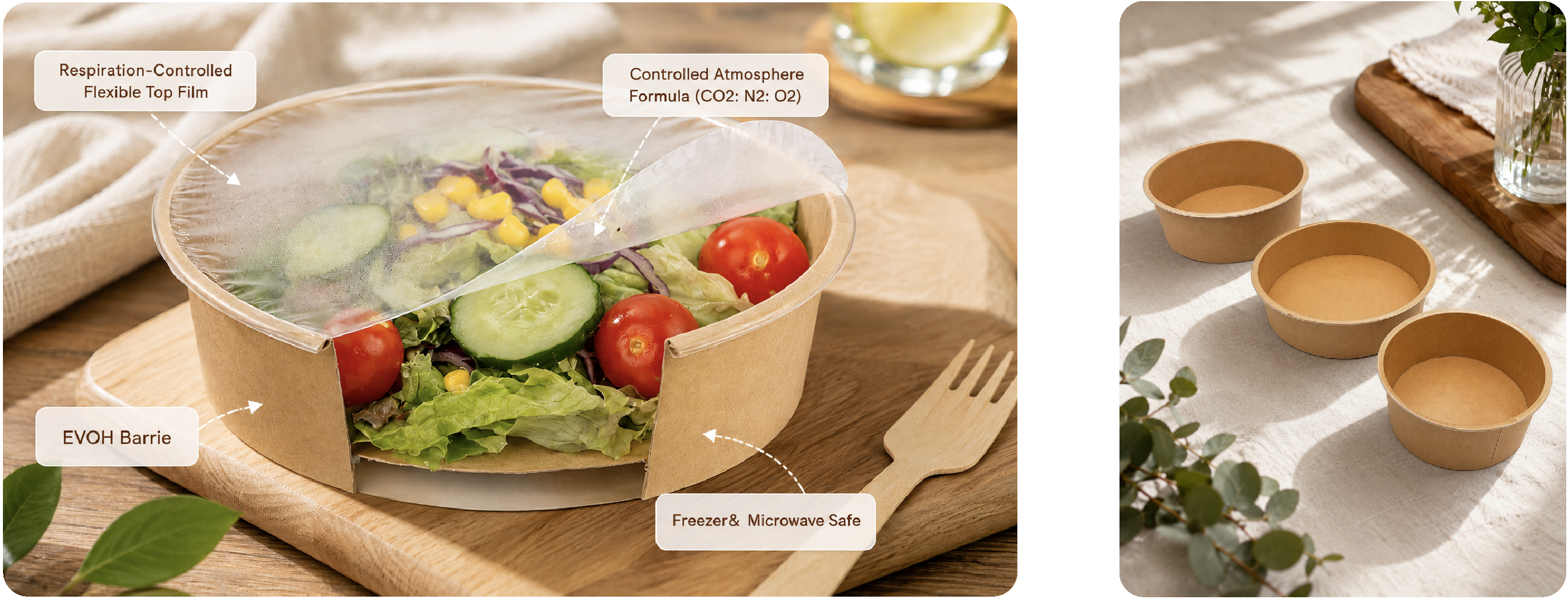
Hello Straw's MAP food boxes: fresh food, far less plastic
So, can MAP work with paper instead of plastic? For Hello Straw, yes, and it is already in production.
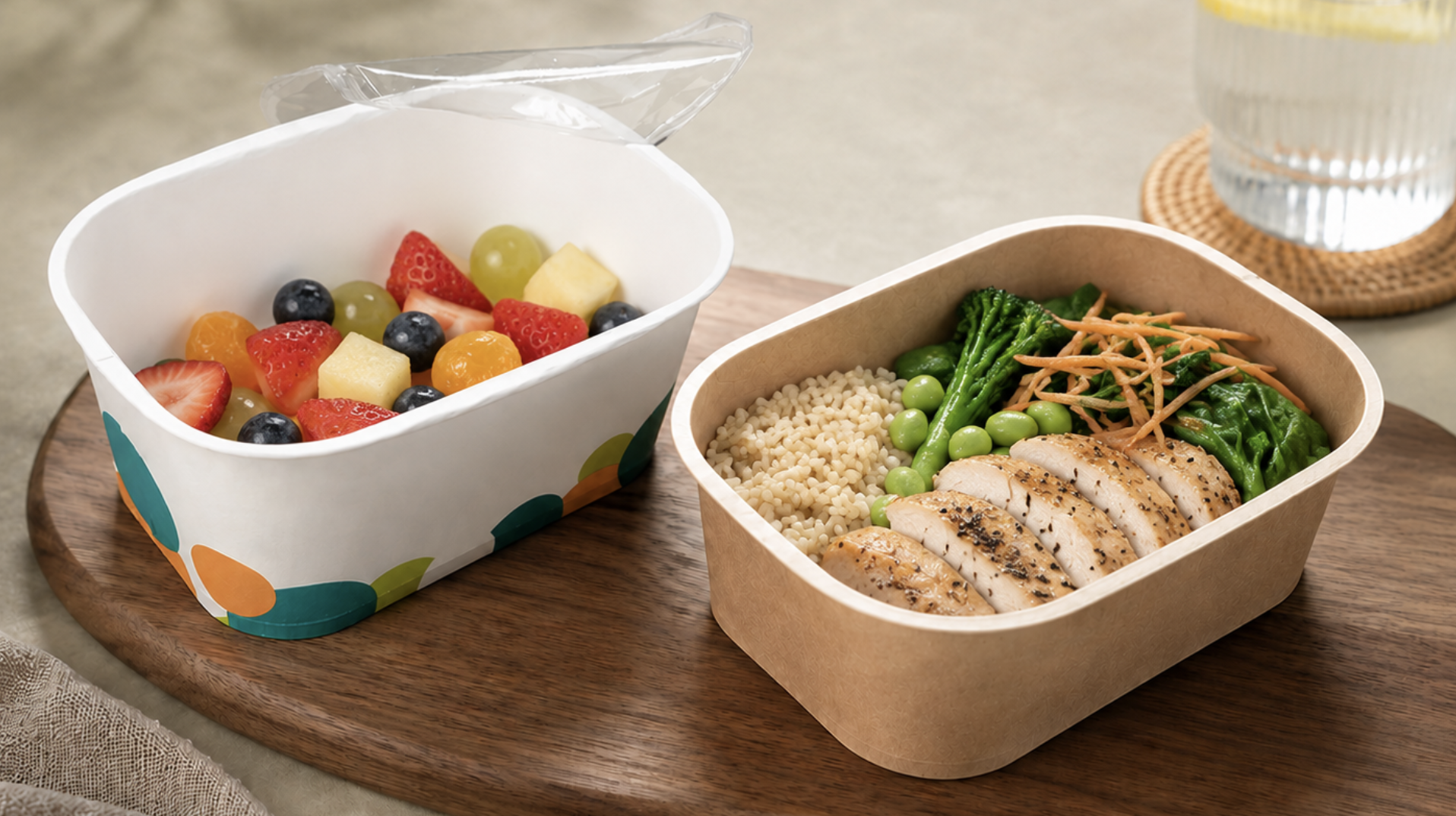
Our MAP Food Box brings modified atmosphere packing to a paper based box. It keeps the freshness brands rely on, while cutting the plastic that sits uneasily on a green label. The box looks and feels like paper, because it mostly is. It suits a wide range of chilled food, from crisp salads and fresh fruit to ready meals and hot mains.
Here is what it offers at a glance:
The freshness and the leak protection come from a specialised EVOH barrier film, vacuum fused to the inside of the box. It makes an airtight, leak free shield that lets very little moisture or oxygen through, while keeping the plastic to a small fraction of what a full plastic tray uses. During packing, the box is flushed with the carbon dioxide and nitrogen blend, then sealed, ready to go straight onto your line. And as your orders grow, we can make more to keep up.
The box does more than keep food fresh and leak free. It is oven-safe as well as microwave safe, so it suits popular baked ready meals like cottage pie and pasta bake, not just microwave dishes. And the film peels away cleanly after use, so the paper box can be recycled, where a full plastic tray mostly cannot.
Most ready meal brands, food manufacturers, caterers and own label ranges will find a fit within the standard range. If you are comparing it with your current MAP food box, the clearest way to decide is to see how it holds your own product. You can request a sample pack and our team will help you choose.
Choosing the right MAP packaging for your brand
Picking the right box comes down to a few practical questions.
- Your food type. Oily, saucy, dry or fresh produce all behave differently, and this shapes the barrier and the gas mix.
- How it will be heated. If customers will warm it up, the box needs to handle it.
- The shelf life you need. Think about the days from pack to plate, and how far the product needs to travel.
- Size and line fit. Sizes run 600ml to 1300ml, custom on request, and the rim fits existing heat seal lines.
- Volume and timing. Your order size and timing help us plan the right run.
- Recycling route. Check what is collected in your market, so the on pack message matches the local reality.