


What is the packaging waste Regulation (PPWR) and why it matters now
The Packaging and Packaging Waste Regulation (PPWR), formally Regulation (EU) 2025/40, replaces the old Packaging Directive and the previous packaging directive from 1994. The shift to this new regulation matters more than it sounds: unlike the old framework, which had to be transposed into national law, PPWR applies directly under EU rules and creates the same rules across all EU member states from 12 August 2026.
For anyone buying, specifying, or supplying packaging into the EU, EEA, UK, or Switzerland, this is the single biggest packaging compliance shift in a decade. It covers every material type: plastic, paper, board, coatings, adhesives, inks. It doesn't matter where the packaging is manufactured. If it ends up on the EU market, it's in scope.
Why this is landing on your desk now
Brand owners are classed as the "manufacturer" under PPWR and carry legal responsibility for a Declaration of Conformity. That responsibility flows down the supply chain, which is why procurement, sustainability, and compliance teams are now sending supplier questionnaires asking for material data, test reports, and written declarations ahead of the deadline.
Key PPWR deadlines for 2026 and beyond
Note: the UK has not adopted PPWR directly. UK-specific obligations continue to sit under the Packaging (Essential Requirements) Regulations 2015 and EPR. However, any packaging entering the EU or Northern Ireland market falls under PPWR regardless of where the buyer is based. UK brands are increasingly asked to demonstrate alignment even for GB-only ranges, since many operate across both markets. The European Commission is also expected to clarify parts of the rollout through implementing acts, including how packaging labels are applied in practice.
Substances of concern in plastic packaging: Heavy metals and PFAS limits
From August 2026, packaging placed on the EU market must stay within defined limits for harmful substances in packaging and the waste generated from it:
- Heavy metals: combined concentration of lead, cadmium, mercury, and hexavalent chromium must not exceed 100 mg/kg.
- PFAS (per- and polyfluoroalkyl substances): restricted in food-contact packaging, with limits including total fluorine ≤ 50 mg/kg. These limits apply whether or not PFAS were intentionally added, and there is currently no confirmed transitional period for food-contact packaging.
Limiting hazardous substances also supports waste management by preventing packaging from contaminating waste streams and other waste streams at end of life. Producers are also expected to ensure packaging complies with recyclability requirements as well as substance limits, since disposal costs sit with them under extended producer responsibility.
This is where material choice stops being a sustainability talking point and starts being a compliance risk factor. PFAS is most commonly associated with grease- and moisture-resistant coatings, the kind used to make packaging liquid-repellent. That includes many coated paper products, some moulded fibre formats, and virtually all plastic-laminate packaging using fluorochemical treatments.
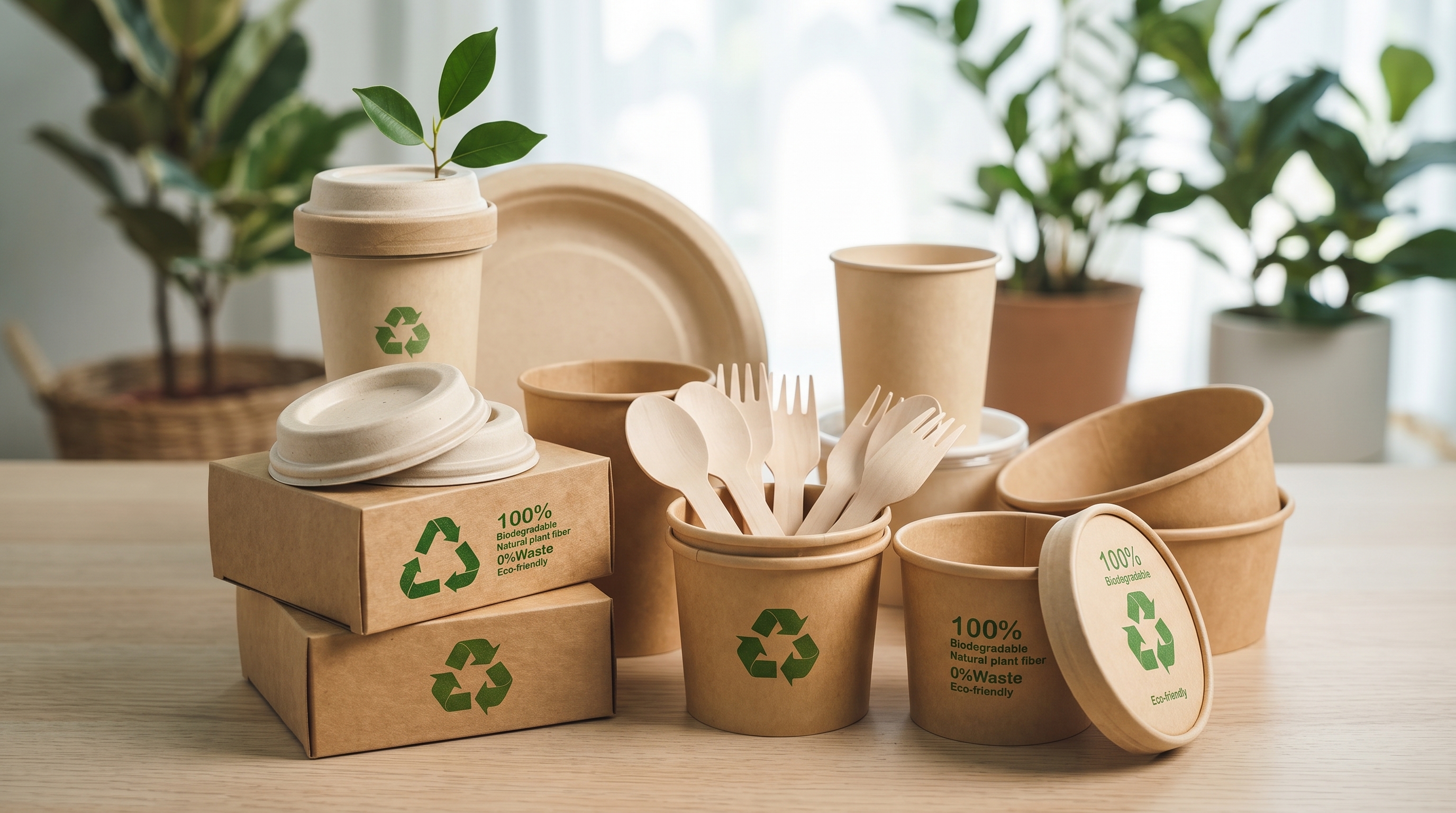
Why recycled content and Material Choice Simplify PPWR Compliance
Not all packaging carries the same compliance burden, and under the new rules that burden is shaped by packaging design as well as material choice. The table below compares how conventional plastic packaging and Hello Straw's paper-based alternatives sit against the two PPWR substance requirements most likely to affect food and beverage packaging buyers.
Buyer takeaway
Switching to a lower-risk material doesn't remove the need for documentation. Every supplier should provide evidence regardless of material. Lower-impact packaging solutions can reduce environmental impact and support the circular economy while helping cut pollution through better collection and recycling. But starting from a format with fewer substances of concern by design gives your compliance file a stronger baseline and reduces the number of unknowns you're chasing before August 2026.
What to ask your packaging supplier for
As the brand owner, you're typically the "manufacturer" under PPWR and responsible for the Declaration of Conformity and technical documentation. That means your suppliers need to hand you the underlying evidence and be able to support labelling evidence where required, so you can demonstrate compliance and complete any required conformity assessment procedure. At minimum, ask for:
- A written declaration of conformance to PPWR substances-of-concern limits
- Test reports covering heavy metals and, for food-contact packaging, total fluorine/PFAS
- Material composition data, including coatings, adhesives, and inks used
- Label-ready information on recyclability and disposal methods, since labels must inform consumers about recyclability and disposal methods and provide clear disposal instructions to improve recycling rates
- Confirmation of testing frequency and laboratory accreditation
- Any relevant third-party certifications (for example, home compostability or low-plastic certification)
Suppliers who can provide this proactively, rather than only when asked at point of order, save procurement teams significant time during supplier qualification and RFQ stages.
Procurement checklist: Getting ahead of the August 2026 deadline
Frequently Asked Questions
Does PPWR apply to UK-only businesses?
PPWR is not part of UK law, but it applies to any packaging placed on the EU or Northern Ireland market, wherever the business is based. As an EU regulation it applies the same way across member states. Many UK businesses supply both markets, so readiness still matters. Packaging below the 2030 recyclability threshold of 70% cannot stay on the market.
Who is responsible for the PPWR Declaration of Conformity?
The brand owner placing packaging on the market is usually the “manufacturer” under PPWR, responsible for the Declaration of Conformity and technical documentation. This may form part of the conformity assessment procedure. Packaging suppliers support the brand owner by providing material data and test evidence.
What is the PFAS limit for food-contact packaging under PPWR?
PPWR restricts PFAS in food-contact packaging, including a total fluorine limit of 50 mg/kg. This applies whether or not PFAS was intentionally added, and takes effect from 12 August 2026.
Is paper packaging automatically PPWR-compliant?
No material is compliant on its own. Paper can still carry PFAS if a liquid-resistant coating was used, so test reports and declarations always matter. Hello Straw keeps this low by design with a water-based coating under 1% by weight, tested daily, with declarations available on request.
What happens if a supplier cannot provide PPWR documentation by August 2026?
Packaging without the right evidence can be held back from the EU market, leaving the brand owner unable to complete their Declaration of Conformity. The simpler route is a supplier who shares proof up front. Hello Straw provides declarations, test reports, and material data on request.
What should I ask my packaging supplier for under PPWR?
Ask for a written declaration of conformance, test reports for heavy metals and PFAS, and material data covering coatings, adhesives, and inks. Label-ready recyclability information helps too.