
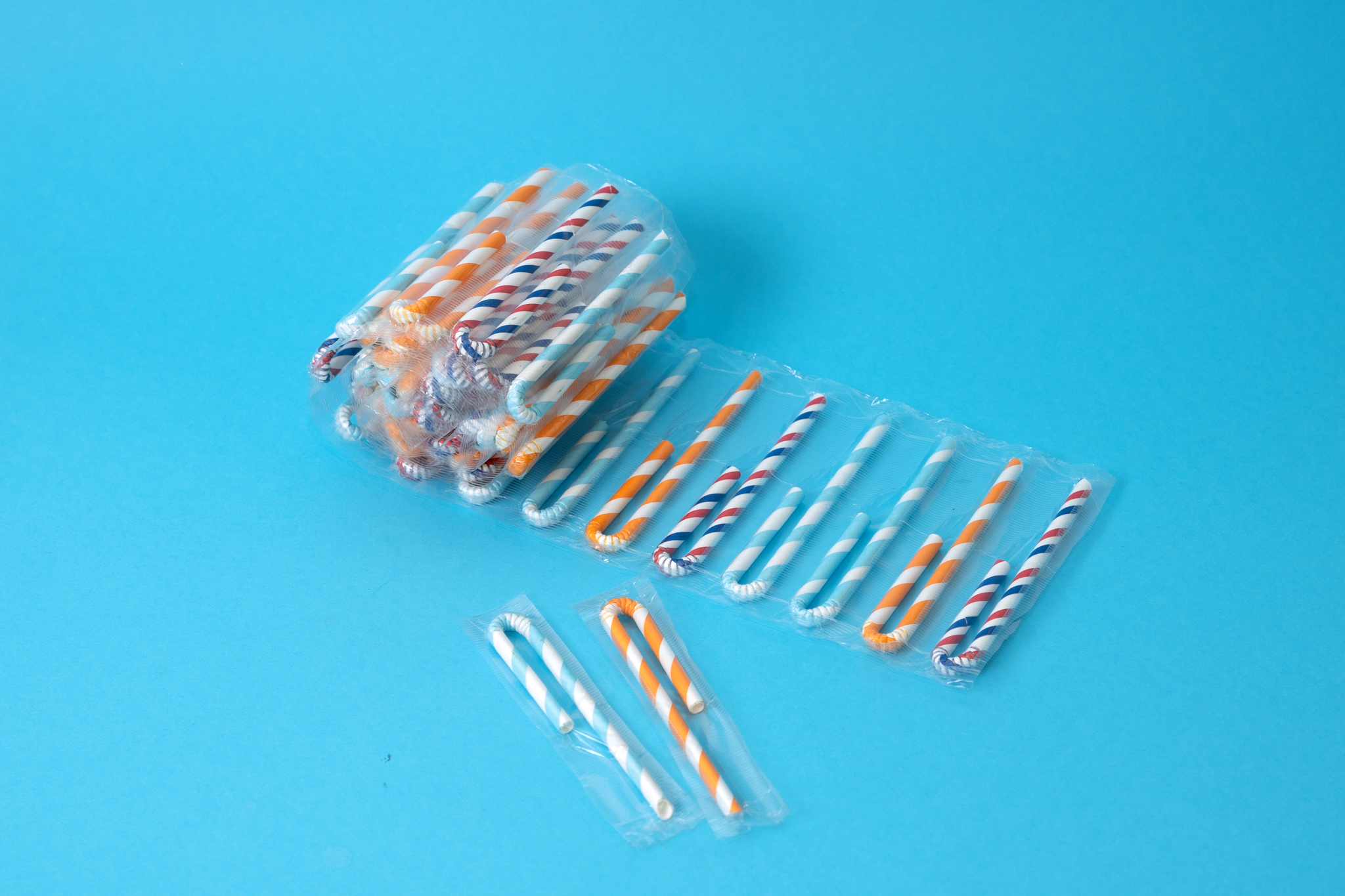
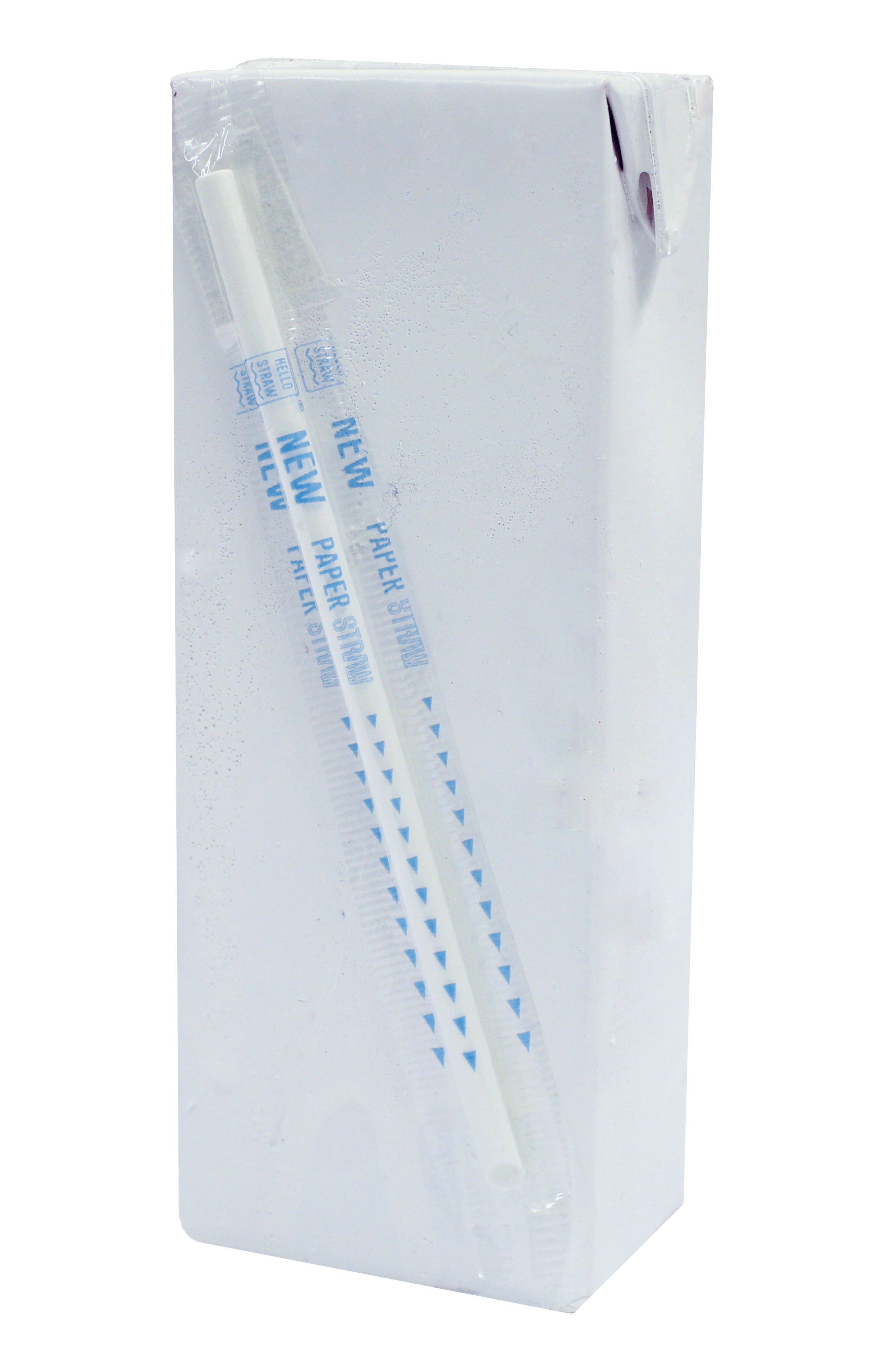
It is a common problem with paper straws. The good news is that it is also a solved one. Our answer is the U-straw, the bendable shape in our Aseptic Line of paper straws, built for this exact moment: made to go through the foil cleanly and stay firm while you drink.
Why some paper straws bend instead of going through the foil
When brands moved away from plastic, paper straws arrived fast. That speed was good for the planet and good for cutting single-use plastic. The straw itself was where it fell short, because many early versions were made to look the part rather than to do the hardest job on the carton.
A juice box asks three things of a straw, one after another: get through the foil, stay firm while you drink, and hold its bend from the first sip to the last. A weak straw tends to fall down on each one.
- The tip gives way. A juice box seal is tough foil, and a soft paper tip crushes flat against it instead of going through.
- The body caves in. With too few paper layers, the tube collapses under your hand before the tip ever reaches the foil.
- The bend goes soft. The fold is the weak spot, so once it gets wet the straw softens there and sags halfway down the drink.
None of this means paper was the wrong choice. It means those early straws were asked to do a hard job before they were ready for it. A well-made paper straw does not have these problems.
How we built the U-Straw
We went back to the drawing board and built the U-Straw around those three jobs. Here is what changed.
The Aseptic Line: one range, different shapes
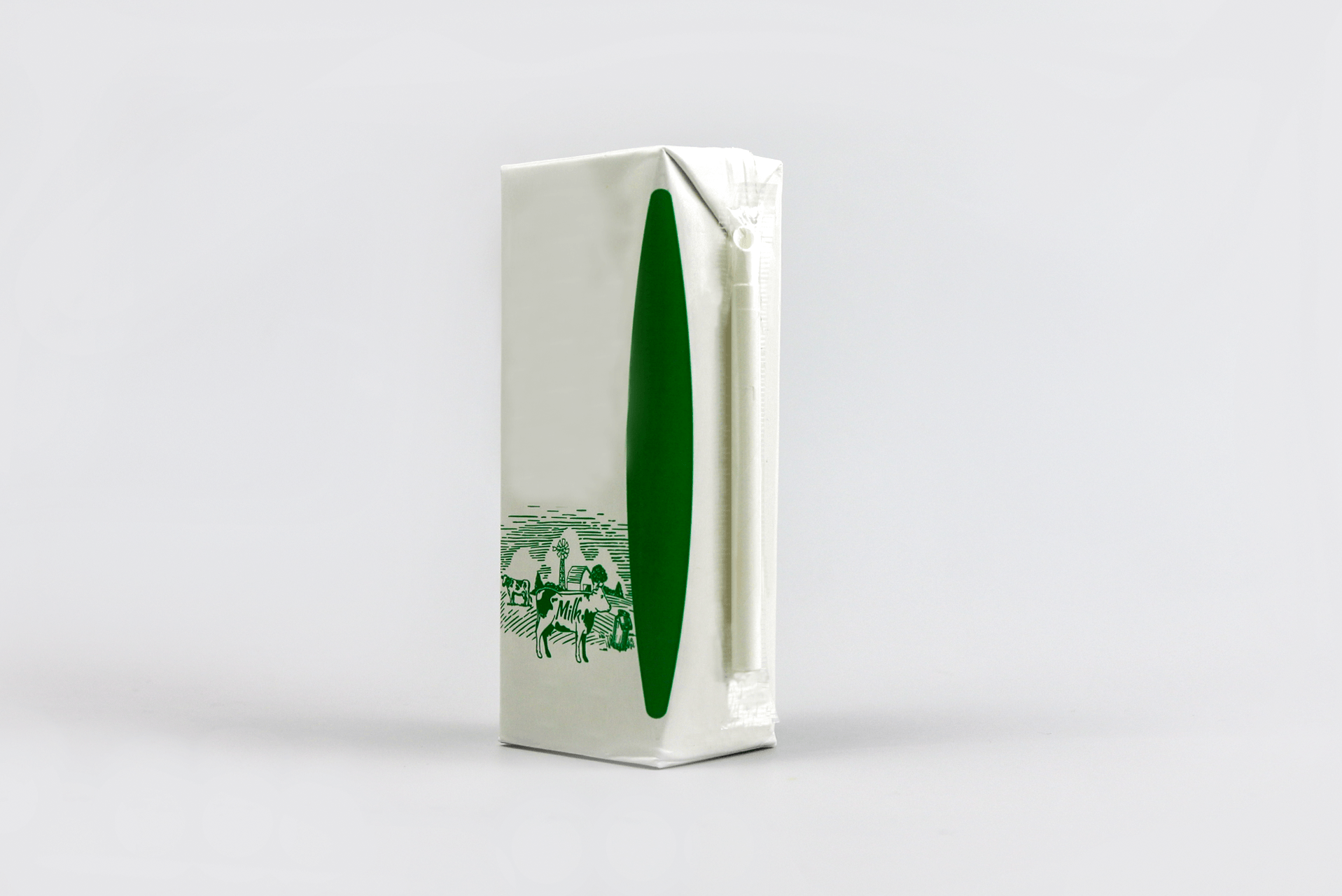
The U-straw is one of the shapes in our Aseptic Line, our range of aseptic paper straws for shelf-stable cartons, the kind that sit on a shelf for months without refrigeration. The whole range runs on standard filling lines and is compatible with Tetra Pak and SIG machines, so most juice and dairy producers can use it without changing their line.
The shape changes to suit the pack:
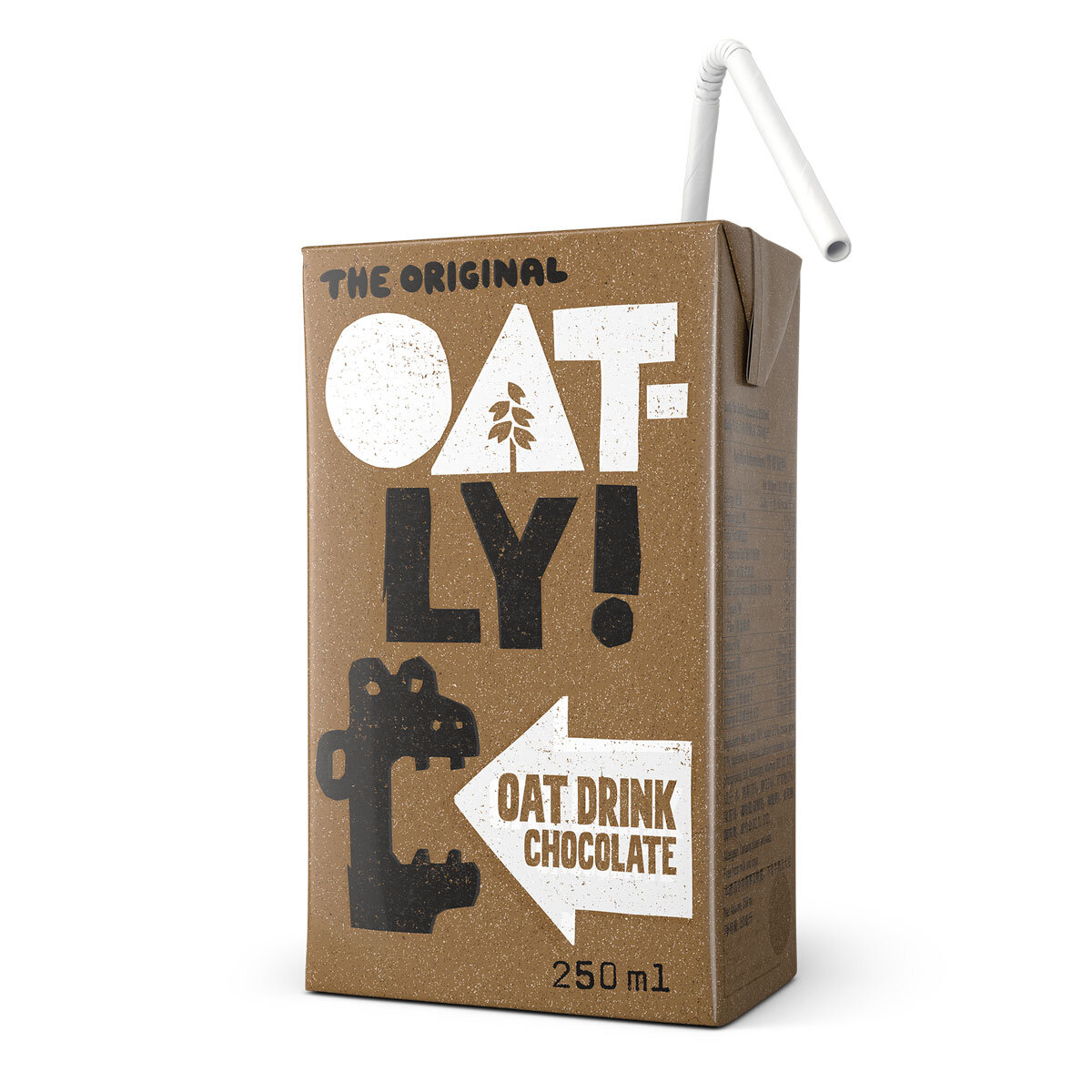
- U-straw: the bendable U-shape, the one most people picture on a juice box. It bends to drink and still holds firm.
- I-shape: a single-bend straw for packs where an angled draw works best.
- Telescopic straw: an extending straw that pulls out to full length, handy where a longer reach helps.
Between them, the range covers most of what a beverage brand needs: juice boxes, pouches and ready-to-drink cartons. If you are not sure which shape fits your pack, we are glad to talk it through and send samples in your exact format.
Why the straw matters more than brands think
It is easy to see the straw as a small detail. For your customer, it is the last thing they touch before they taste your product. When it works, nobody notices, and that is a quiet win. When it fails, the frustration is real, and it sticks to your brand rather than to the straw. Getting this small thing right is one of the simplest ways to keep people happy with the whole experience.
How to choose a paper straw that performs