
By Hello Straw Product Team
Last updated: February 2026
Disposable chopsticks are often associated with Asian dining cultures, but their impact, and potential for innovation is global. While countries like Japan use an estimated 23–25 billion pairs of disposable chopsticks every year, awareness around sustainability is reshaping how utensils are viewed far beyond Asia.
In Western markets such as the United States and the United Kingdom, the food service industry is actively searching for alternatives that reduce environmental impact without compromising convenience or hygiene. This shift has opened the door to a new solution: paper chopsticks.
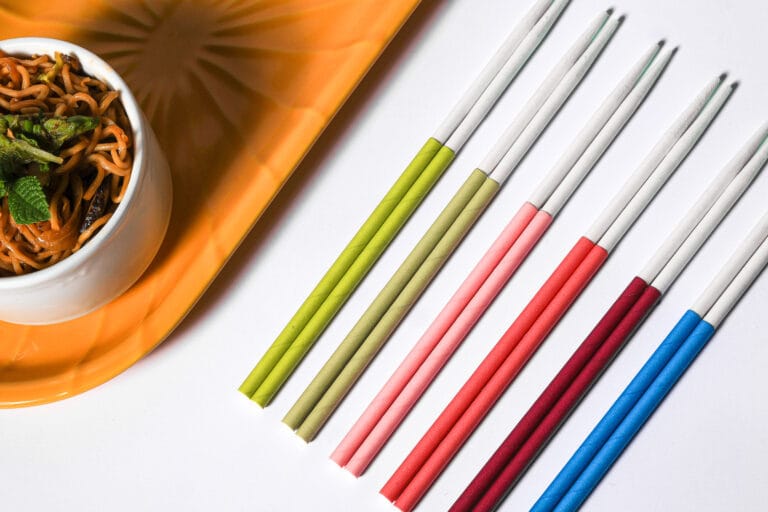
As part of the broader move toward paper serviceware, paper chopsticks are emerging as a credible, sustainable option for modern dining.
Chopsticks Market Overview: East vs. West
The global disposable chopsticks market is valued at over $22 billion, with Asia accounting for the vast majority of consumption. North America currently represents a much smaller share approximately $1.24 billion, but this is continuously changing.
The rising popularity of Asian cuisines in the US and UK, combined with growing environmental awareness, is increasing demand for disposable chopsticks. At the same time, restaurants and distributors are questioning traditional materials like wood and bamboo and looking for more sustainable alternatives.
This creates a unique opportunity for innovation in Western markets.
Sustainability Drivers in Western Food Service
Plastic Bans and Regulations
Policy changes have played a major role in accelerating sustainable utensil adoption. The EU and UK single-use plastics ban, effective since 2021, forced restaurants to replace plastic cutlery with alternatives such as wood and bamboo.
While these materials were a step forward, they are not the final solution. The regulatory shift has created space for next-generation materials, including paper, that go further in reducing environmental impact.
Corporate ESG Goals
Many food service operators in the US and UK now operate under ESG (Environmental, Social and Governance) commitments. Sustainable packaging and utensils are highly visible elements of these strategies.
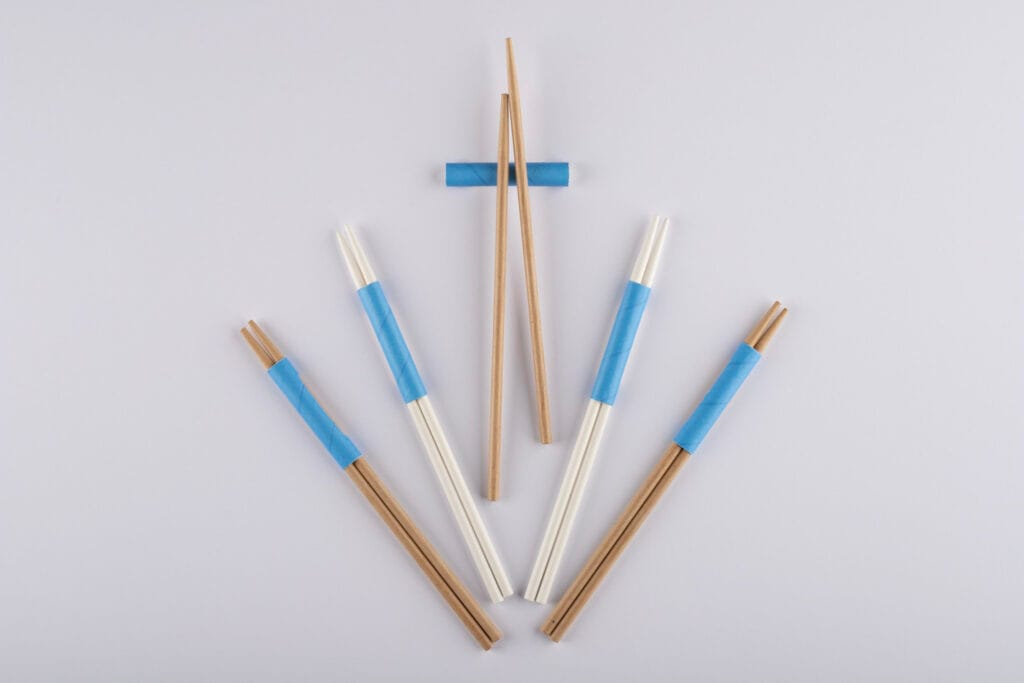
By adopting compostable, paper-based chopsticks, restaurants can strengthen their sustainability credentials and demonstrate concrete action, not just ambition.
Challenges with Traditional Chopsticks
Deforestation and Sourcing
Despite their natural image, wooden and bamboo chopsticks raise serious sustainability concerns. Globally, an estimated 20 million trees are cut each year to produce disposable chopsticks.
For businesses aiming to reduce deforestation and protect biodiversity, reliance on single-use wood products increasingly conflicts with sustainability goals.
Disposal Issues
In the US and UK, used wooden or bamboo chopsticks typically end up in landfills, as they are rarely recycled and often contaminated with food waste.
Paper chopsticks, on the other hand, can be composted alongside food waste, simplifying disposal and improving end-of-life outcomes, especially in regions with established composting systems
Hygiene Perceptions
Western consumers often associate single-use utensils with better hygiene. However, wooden chopsticks can splinter, absorb moisture, or carry chemical residues depending on treatment.
Paper chopsticks offer a clean, smooth and sterile option every time, aligning with both hygiene expectations and sustainability concerns.
Emergence of Paper Chopsticks in the United States
Early Adopters
In forward-thinking food hubs such as California and New York, sustainability-focused sushi chains and Asian-fusion restaurants are beginning to explore paper chopsticks as a visible statement of environmental responsibility.
These early adopters use paper chopsticks not just as utensils, but as part of their brand story.
Market Potential
North America remains the smallest disposable chopsticks market globally, which also means it has the highest growth potential. As awareness increases and alternatives become more accessible, paper chopsticks are well positioned to replace imported wooden options.
Availability
Solutions like Hello Straw’s paper chopsticks are now available for bulk purchase, making them practical for distributors, wholesalers and restaurant suppliers across the US.
Uptake in the UK and Europe
Post-Plastic Ban Shift
Following the EU and UK plastic bans, many businesses transitioned to wooden cutlery. Paper chopsticks represent the next step in this evolution, moving beyond plastic replacement toward true material innovation.
Consumer Reception
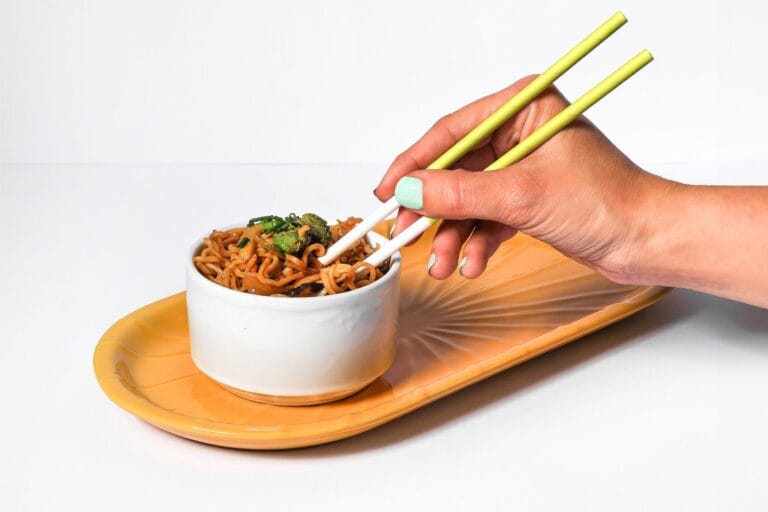
UK consumers are increasingly eco-conscious and responsive to visible sustainability efforts. Offering paper chopsticks signals that a restaurant is ahead of the curve, not just compliant.
Early anecdotal feedback suggests customers appreciate knowing their utensils can be composted rather than discarded.
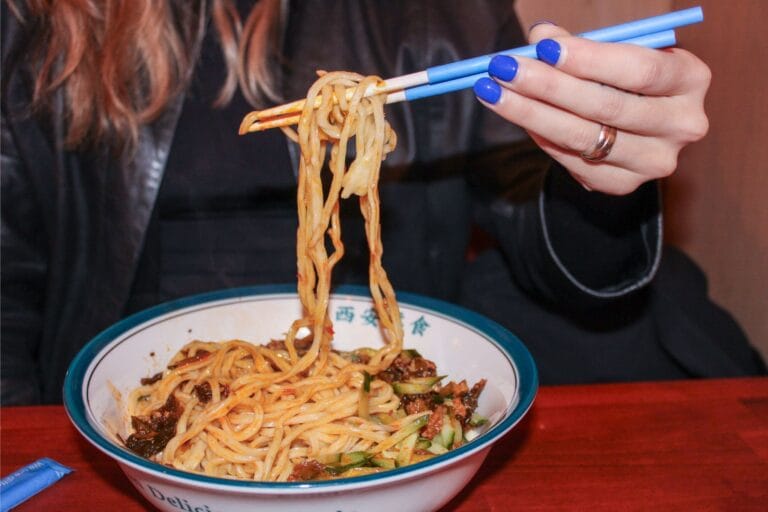
Supportive Infrastructure
The UK and EU benefit from expanding commercial composting infrastructure, making it easier for paper-based cutlery to be properly processed and deliver on its environmental promise.
Benefits for Western Businesses
Brand Differentiation
Paper chopsticks allow restaurants and food brands to stand out as leaders in sustainability, attracting environmentally conscious customers and positive attention.
Customer Experience
They offer a guilt-free dining experience that is smooth, splinter-free and comfortable to use, without the environmental trade-offs of traditional disposables.
Future-Proofing
By adopting paper chopsticks early, businesses stay ahead of potential future regulations, taxes or restrictions on wooden utensils, similar to past policy shifts in China and Europe.
Conclusion
Paper chopsticks represent a small but meaningful shift in Western dining — one that aligns with global sustainability goals and evolving consumer expectations.
For restaurants, caterers and food service providers in the US and UK, piloting paper chopsticks is an easy, visible way to reduce environmental impact while enhancing brand credibility.
Sometimes, real progress starts with the simplest change — even something as small as a pair of chopsticks.