
By Hello Straw Product Team
Last updated: March 2026
As sustainability expectations continue to rise in 2026, businesses across hospitality, food service, travel, and events are under growing pressure to eliminate plastic straws. Governments are tightening regulations, consumers increasingly expect eco-friendly alternatives, and companies want solutions that align with both environmental goals and operational efficiency.
Two of the most common alternatives are paper straws and metal straws. Both are promoted as sustainable options, but they function very differently in real-world commercial settings.
While metal straws offer durability and reusability, paper straws often provide the most practical, scalable, and regulation-friendly solution for businesses. This guide compares the two options across environmental impact, cost, operations, and customer experience to help companies make the right decision in 2026.
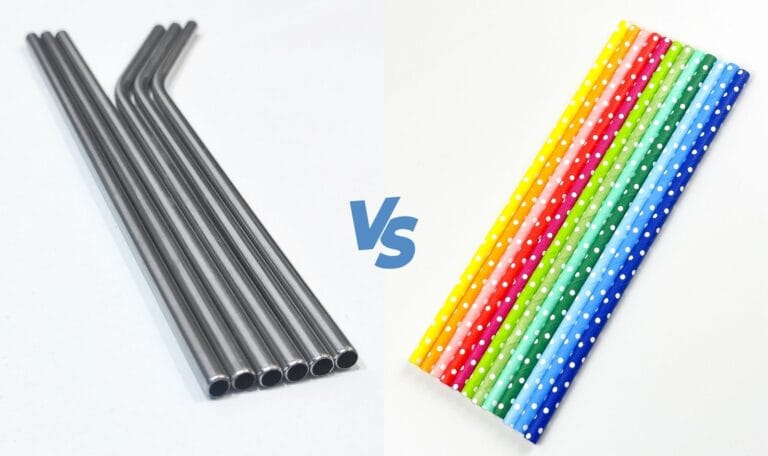
Comparing Paper and Metal Straws: A Business-Centric Breakdown
When businesses evaluate straw alternatives, the decision usually goes far beyond sustainability alone. Key factors include:
- Environmental performance
- Cost and procurement
- Operational complexity
- Hygiene and safety
- Customer experience
- Regulatory compliance
Both paper and metal straws have advantages in certain scenarios. However, for high-volume operations or customer-facing businesses, paper straws tend to integrate more easily into existing workflows with fewer logistical challenges.
Environmental Performance Between Paper and Metal Straws
Environmental impact is one of the main reasons companies replace plastic straws, but the sustainability profile of alternatives varies.
Metal straws are typically made from stainless steel, which requires energy-intensive mining, smelting, and manufacturing processes. While they are reusable, their production footprint can be relatively high.
Paper straws are produced from renewable resources, and modern designs often use responsibly sourced paper fibers. Many newer models are also PFAS-free and compostable, making them better aligned with circular economy goals.
For businesses seeking a balance between environmental responsibility and operational practicality, paper straws offer a strong solution that reduces plastic waste without introducing new complexities.

Lifecycle and Waste Management
Another important consideration is what happens after the straw is used.
Paper straws break down naturally and can often be composted or disposed of through standard waste streams depending on local facilities. Their biodegradable nature helps reduce long-term landfill impact.
Metal straws, although designed for reuse, are frequently lost, taken by customers, or discarded in hospitality settings. When that happens, their sustainability advantage quickly diminishes.
Recycling stainless steel also requires specialized infrastructure that is rarely available at the point of consumption. For businesses seeking simple waste management practices, paper straws provide a more straightforward path.
Hygiene and Cleaning Challenges with Metal Straws
One of the biggest limitations of metal straws in commercial environments is sanitation.
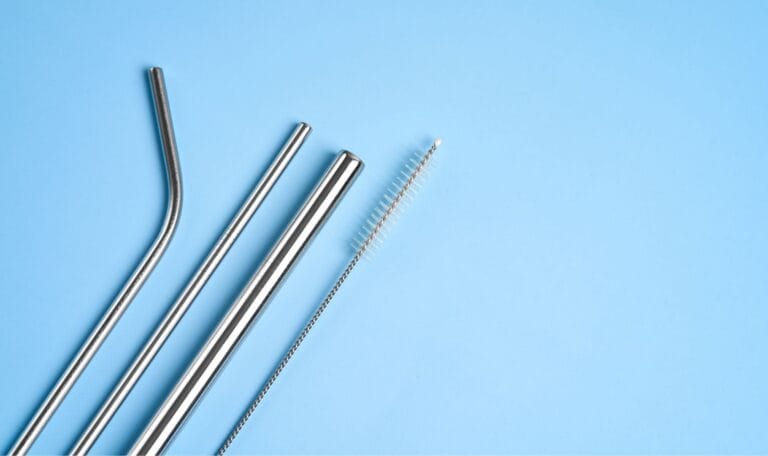
The narrow inner tube of a metal straw can easily collect residue from beverages such as juices, milk, smoothies, or soft drinks. If not cleaned thoroughly, this residue can allow bacteria to build up inside the straw, where it is difficult to detect.
For personal use, metal straws can work well because individuals are responsible for cleaning their own straw after every use.
However, in commercial environments such as restaurants, bars, hospitals, airlines, and catering services, ensuring consistent sanitation becomes far more complicated. Staff would need to collect, inspect, brush-clean, sanitize, dry, and redistribute every straw after use.
In busy hospitality environments, this process adds significant labor and operational complexity. There is also the risk of straws being lost, damaged, or returned improperly cleaned.
Because of these factors, disposable straws remain the more practical option for commercial use, where hygiene, speed, and reliability are essential.
Cost Analysis: Short-Term vs Long-Term Value
Cost considerations go beyond unit price. Businesses must also consider labor, logistics, and replacement rates.
Metal straws can appear cost-effective if reused many times, but cleaning procedures, loss rates, and operational disruptions often increase their real cost.
Paper straws, by contrast, offer predictable and scalable costs, making them easier to manage across large operations.
Initial Purchase and Bulk Pricing
Paper straws have significantly lower upfront costs and are widely available in bulk quantities. This makes them easy to procure for businesses operating multiple locations or large events.
Metal straws require a much higher initial investment. Scaling them across restaurants, hotels, or airline fleets can quickly increase costs.
Paper straws fit easily into existing disposable inventory systems, allowing businesses to replace plastic without major procurement changes.
Maintenance, Cleaning, and Replacement Costs
Reusable metal straws require strict sanitation procedures. This typically involves manual cleaning brushes, dishwashing cycles, and storage systems.
These processes increase labor time and equipment usage. In hospitality environments, metal straws are also frequently lost or taken by customers, creating ongoing replacement costs.
Paper straws eliminate these issues entirely. Their single-use format ensures hygiene and removes the need for cleaning or recovery systems.
Usability and Operations
Operational simplicity is often underestimated when choosing sustainable alternatives.
Paper straws require no additional procedures, making them ideal for fast-paced service environments. Staff can simply provide them as needed.
Metal straws introduce additional steps such as collection, cleaning, drying, and redistribution, which can slow service and increase training requirements.
The Early Challenges of Paper Straws
Paper straws became widely adopted following plastic straw bans across Europe and other parts of the world. However, early consumer experiences were not always positive.
Many people encountered paper straws that became soggy or began to dissolve within minutes, making it difficult to finish a drink comfortably.
These early versions created skepticism among both consumers and businesses.
Fortunately, manufacturing technology has improved significantly. Modern paper straws are designed to be far stronger and longer-lasting, maintaining their structure throughout the drinking experience while remaining fully plastic-free.
Compliance and Policy Pressures
Regulation is an increasingly important factor in straw decisions.
Plastic straw bans have expanded across Europe, North America, and other regions. Businesses are expected to adopt alternatives that reduce environmental impact while maintaining hygiene standards.
Paper straws already meet most regulatory requirements and are widely accepted as compliant alternatives.
Metal straws can sometimes fall into regulatory grey areas due to sanitation requirements associated with reusable food-contact items.
Strategic Recommendations by Business Type
Different industries have different operational realities.
Food and beverage businesses such as cafés, bars, and quick-service restaurants benefit most from paper straws because they are easy to distribute, hygienic, and operationally simple.
Hospitality and travel industries including airlines, hotels, and cruise lines benefit from the lightweight and disposable nature of paper straws, which simplifies service logistics.
Corporate offices and events also favor paper straws because they support sustainability messaging without requiring post-use collection systems.
Metal straws may still work in certain controlled or premium environments, but for most businesses they introduce unnecessary complexity.

Paper straws by Hello Straw
Hello Straw produces high-performance paper straws designed specifically for commercial environments.
Our straws are engineered to be among the strongest paper straws available, tested to last a minimum of two hours and up to ten hours in liquids without becoming soggy or losing structural integrity.
Hello Straw products are trusted by global brands including Coca-Cola, Costa Coffee, KFC, Burger King, and many others.
Conclusion: Which Straw Wins in 2026?
Both paper and metal straws offer alternatives to plastic, and each has situations where it may work well.
Metal straws are suitable for personal use, where individuals are responsible for cleaning and maintaining their own reusable straw.
However, for most commercial environments where hygiene, speed, and scalability matter, paper straws are the more practical solution. They are affordable, compostable, regulation-friendly, and easy to integrate into everyday operations.
As sustainability continues to shape business decisions in 2026, paper straws stand out as the option that balances environmental responsibility with operational simplicity.