
Can You Microwave Paper Cups? The Safety Guide
Most disposable paper cups aren’t built for microwave use. Learn which coatings pose real risks, how to identify safe cups, and what hospitality buyers need to verify before sourcing.
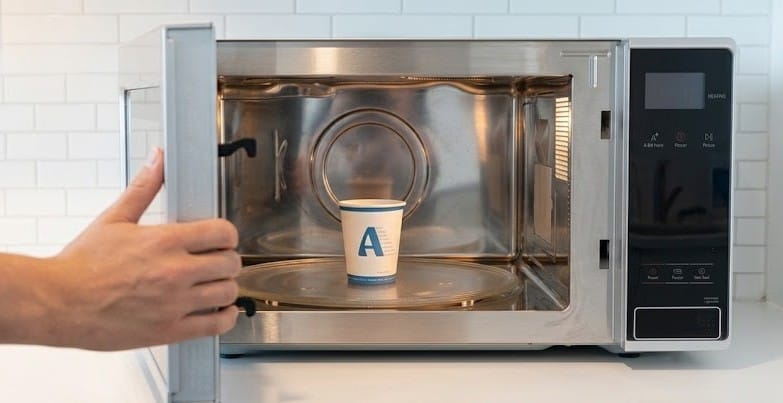
The Short Answer: Standard disposable paper cups should not be microwaved because they often have polyethylene (PE) or wax coatings that can melt or potentially leach chemicals when heated. Only use a paper cup in the microwave if it is specifically labeled and certified as microwave-safe with a microwave-safe symbol on the base; otherwise, transfer the liquid to a ceramic or glass container before heating.
Table of Contents
Can Paper Cups Go In The Microwave? Why Standard Cups Fail
Most paper cups are designed for ambient or hot-filled use, not reheating. When microwaved, several failure modes can occur:
- Coating breakdown: PE and wax linings melt or soften at 40–70°C, releasing chemicals and microplastics into the liquid.
- Seam failure: Adhesive weakens under heat, causing the cup to leak or collapse.
- Paper softening: Cellulose absorbs moisture under heat, making the cup damp and malleable.
- Fire risk: Printed inks can overheat; in extreme cases, paper can char or ignite.
Why This Matters For Your Business
A cup failure in front of a customer is a brand moment. For hospitality and foodservice buyers, sourcing certified cups is due diligence, not just packaging choice.
Are Paper Cups Microwave Safe? UK And EU Regulatory Requirements
Paper cups are food contact materials governed by the Food Standards Agency and UK REACH regulations. The key testing standard is EN 1186, which assesses whether coating substances migrate into food under heat.
The Environment Act 2021 and EU Single-Use Plastics Directive also regulate packaging recyclability and restrict certain plastic linings. Under the incoming PPWR 2025/40, microwave-relevant cups must meet strict recyclability and chemical criteria. For UK buyers, a supplier’s microwave-safe claim must be backed by EN 1186 test data, not marketing alone.
What Determines Microwave Safety? Coatings, Construction, And Safe Heating Limits
Three factors determine whether a paper cup can withstand microwave heat without failing:
Coating Type
- PE (polyethylene): Most common coating, low melting point (~70°C), not microwave-safe.
- Wax: Used in cold-drink cups, melts at ~40°C.
- PLA (polylactic acid): Plant-based but deforms above 60°C, unsuitable for microwaving.
- Water-based coatings: More stable but performance varies by formulation.
- PFAS-free food-grade: Safest option when tested and certified. Used by Hello Straw and engineered to maintain structural integrity under controlled heat.
Cup Construction And Heating Protocol
Double-wall cups insulate better than single-wall, slowing heat transfer to the lining, but construction alone doesn’t make a cup microwave-safe. Coating type is the determining factor. Safe heating requires: maximum 30 seconds per interval at 50–70% power, never exceeding 90 seconds total. Cup must be at least two-thirds full to avoid uneven heating. Never reheat the same cup twice, as repeat cycles degrade coating integrity.
Paper Cup Coating Types: Safety Comparison Table
Coating | Heat tolerance | Microwave safety | Sustainability |
|---|---|---|---|
PE (polyethylene) | Up to ~70°C | Not safe | Non-biodegradable |
Wax | Up to ~40°C | Not safe | Non-biodegradable |
PLA | Up to ~60°C | Risky | Compostable (industrial) |
Aqueous / water-based | Varies | Only if certified | More eco-friendly |
PFAS-free food-grade | Tested per spec | Safest when certified | PFAS-free, food-safe |
❌ Not microwave-safe
Common high-street takeaway cups. Coating can melt and migrate into the drink under microwave heat.
✅ Microwave-safe when certified
Heavier board, food-grade lining, manufacturer-tested and marked with the microwave-safe symbol.
Sourcing Cups For Hospitality Or Workplace Catering?
Get technical data sheets and certification details for Hello Straw’s paper cup range.
How To Identify Microwave-Safe Paper Cups: What To Look For
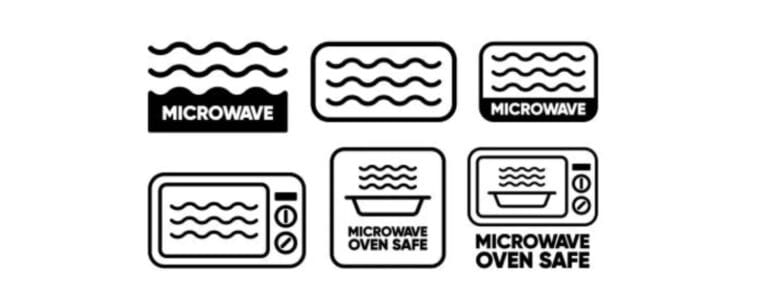
▶️ Look for the microwave-safe symbol, a square with wavy lines, on the cup base. This indicates the manufacturer has tested the cup at specified power levels and durations. Absent symbol = not safe to microwave.
▶️ Check for metal: Metallic rims, foils, or inks create arcing hazards. Ask suppliers for EN 1186 test data and PFAS/BPA-free confirmation. A supplier willing to provide certification is a supplier confident in their product.
How To Source Microwave-Relevant Cups For Hospitality And Foodservice
A typical sourcing review should cover:
(1) Technical data sheet on file with coating type and temperature rating;
(2) EN 1186 certification evidence and PFAS/BPA-free confirmation;
(3) Batch consistency quality process;
(4) Staff guidance on safe handling (lid off, short intervals, two-thirds full).
Hello Straw provides this documentation upfront for our paper cup range, with no delays or surprises. We also supply staff guidance cards and microwave safety signage for kitchens and break rooms. All cups are FSC and BRC certified, ensuring supply chain transparency and food safety compliance.
How To Safely Heat Liquid In A Paper Cup: Step-By-Step Instructions
If you need to use a paper cup in a microwave and the cup carries a microwave-safe certification, the following tips can help you microwave paper cups safely and minimise risk.
Confirm the cup is certified. Look for the microwave-safe symbol on the base before heating anything; if it is not clearly marked, use a microwave safe container or microwave safe mug instead.
Remove the lid. Plastic lids, even BPA-free variants, are typically not rated for microwave use and should always be removed.
Heat in short intervals. Use a maximum of 30-second bursts at 50–70% microwave power to keep drinks warm without overstressing the cup. Avoid full-power heating, which creates uneven hot spots.
Check the cup integrity between intervals. If the cup feels soft, begins to warp, or shows any sign of seam separation, stop immediately and transfer the liquid to a ceramic or glass vessel to avoid safety hazards.
Do not heat below the liquid line. Keep the cup at least two-thirds full. Low liquid volume concentrates heat in the exposed paper walls, accelerating deformation.
Never reheat the same cup twice. Even microwave-certified paper cups are designed for single-use. Repeated heating degrades the coating and structural integrity.
▶️ Safety Tip: If you notice leakage, a burnt smell, or sudden softening, stop immediately rather than continuing to heat. Transfer the liquid to a ceramic or glass vessel.
▶️ Before You Source: Ask for EN 1186 test data and PFAS/BPA-free confirmation.
Frequently Asked Questions
Are Paper Cups Microwave Safe?
Most paper cups are not microwave safe. Standard takeaway cups are typically lined with polyethylene (PE) or wax, which can soften, melt, or break down when exposed to microwave heat. Only paper cups that have been specifically tested and certified for microwave use should be heated.
Before microwaving any disposable cup, look for a microwave-safe symbol and review the manufacturer’s technical documentation. Hello Straw’s certified paper cups meet EN 1186 food-contact standards and include full compliance documentation.
Why Shouldn't You Microwave Standard Paper Coffee Cups?
Most takeaway coffee cups are designed to keep drinks hot, not to withstand microwave heating.
Microwaving a standard paper cup can cause:
PE or wax coatings to soften or melt
Food-contact materials to migrate into the drink
Cup seams to weaken and leak
Uneven heating that creates damaging hot spots
For safety, transfer your drink to a ceramic or glass mug unless the paper cup is clearly certified for microwave use.
Can You Microwave Starbucks Paper Cups?
No. Starbucks takeaway paper cups are not designed for microwave use.
They contain a PE plastic lining and are labelled “Do Not Microwave.” Heating these cups may damage the lining and reduce the structural integrity of the cup.
If you need to reheat your coffee, pour it into a microwave-safe ceramic or glass mug first.
Do Double-Wall Paper Cups Perform Better In The Microwave?
Double-wall cups provide better thermal insulation, which can slow the rate at which the inner lining heats up. However, double-wall construction alone does not make a cup microwave-safe. The coating type and manufacturer certification are the determining factors. Hello Straw’s double-wall cups are designed for use with hot beverages, but microwave use should only occur when the specific product has been tested and certified for it.
What Makes Hello Straw Paper Cups Different From Standard Takeaway Cups?
Unlike many standard takeaway cups, Hello Straw paper cups are designed with safety, compliance, and traceability in mind.
Key differences include:
PFAS-free food-grade coating instead of conventional PE lining
Heavy-duty paperboard for improved durability
EN 1186 migration testing
FSC and BRC certified manufacturing
Full technical documentation and batch traceability
Support for foodservice compliance and audits
While many disposable cups are manufactured primarily for cost efficiency, Hello Straw focuses on verified product performance, regulatory compliance, and documented food safety.
Source Certified Paper Cups Backed By Testing
Full EN 1186 certification, technical specs, FSC and BRC compliance, and free samples for UK hospitality and foodservice buyers.