
EU Single-Use Plastics Directive: The Complete Compliance Guide 2026
Many hospitality buyers switched away from plastic straws in 2021 and assumed they had met EU requirements. However, the EU Single-Use Plastics (SUP) Directive has continued to evolve, with Extended Producer Responsibility (EPR) obligations adding new compliance and cost requirements since the end of 2024. Businesses that cannot provide up-to-date compliance documentation may face failed audits, retailer challenges, or additional liability.
This guide explains the key requirements, how to assess compliant suppliers, which certifications to request, and how to prepare for audits and retailer compliance checks.

💡The Short Answer:
The EU SUP Directive prohibits single-use plastic straws, cutlery, and plates across all 27 EU member states — a rule in effect since July 2021. Extended Producer Responsibility obligations took effect at the end of 2024, creating a second compliance layer that many businesses have overlooked.
Table of Contents
EU Timeline: What's Changed and What's Coming
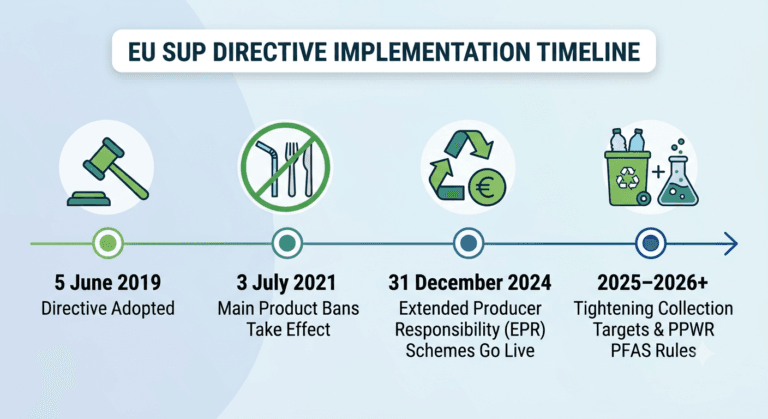
The EU SUP Directive follows a clear implementation sequence. As a European Union measure, it aims to tackle marine plastic pollution, protect marine ecosystems, and target the 10 most common single-use plastic products found on European beaches. Understanding the key dates and their practical impact helps your business stay ahead of compliance risk.
5 June 2019: Directive 2019/904 is adopted
- EU legislators pass Directive 2019/904, creating standardised rules across all 27 EU Member States to ensure regulatory compliance
- Businesses receive a two-year transition window to prepare. If you have existing plastic stock, it should have been cleared five years ago.
3 July 2021: Main product bans come into force
- The EU bans single-use plastic straws, cutlery, plates, drink stirrers, cotton bud sticks, and EPS food containers from the market. No exceptions for existing stock
- Simultaneously, Implementing Regulation (EU) 2020/2151 enters into force, establishing marking rules for specific product categories
- Sanitary products, wet wipes, tobacco products, and beverage cups must carry EU-mandated on-pack warnings with harmonised marking specifications, detailing environmental consequences of improper disposal and helping consumers make informed waste choices
- The Commission published implementation guidelines on 31 May 2021
31 December 2024: Extended Producer Responsibility schemes go live
- Building on the 2018 Revised Waste Framework Directive, EPR requires producers, importers, and sellers to register with national schemes in each member state and contribute financially to waste collection, sorting, recycling, awareness raising, and litter cleanup
- EPR obligations apply to both banned items and non-banned single-use takeaway food containers and plastic cups, any business selling paper cups with plastic lining must register and pay fees
- In addition, costs vary by material composition composition and member state but are significant and ongoing
2025 onwards: Collection targets tighten
- 2025: EU member states must achieve 77% separate collection target for plastic beverage bottles
- 2029: Plastic bottles face 90% separate collection targets, with deposit return schemes a key compliance route and tethered caps mandatory to prevent littering
- Signals regulatory direction: packaging with higher plastic content will face tighter restrictions, reduction targets, and waste management requirements. Broader circular economy goals drive the entire life cycle of plastic products and packaging materials
These measures signal clear regulatory direction: packaging with higher plastic content will face tighter restrictions, reduction targets, and waste management requirements. Broader circular economy goals drive the entire life cycle of plastic products and packaging materials.
What's Banned and What You Need to Replace It
The regulation targets specific items. Understanding which products fall into each category helps procurement teams and operators plan seamless transitions.
Straws
All single-use plastic straws are banned. Compliant alternatives: paper straws with FSC or PEFC certification. The key concern is durability — request test data from suppliers. Aseptic paper straws are engineered for extended shelf-life applications (juice cartons, meal replacement beverages, UHT milk).
Cutlery
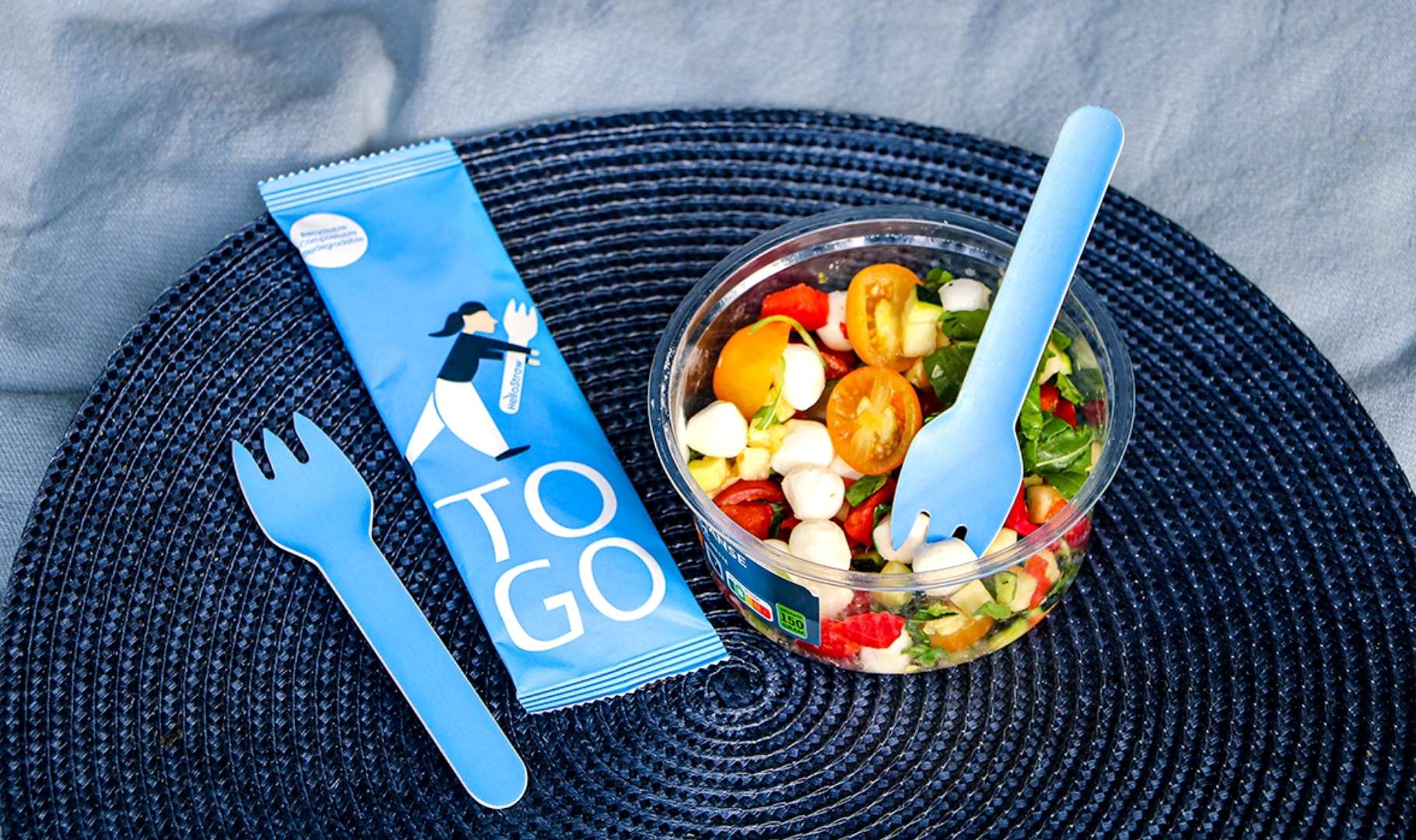
All plastic single-use cutlery is banned. Compliant alternatives: paper, wood, bamboo, starch-based compostables. Critical warning: The law specifically prohibits oxo-degradable plastics, even if marketed as “degradable.”
Cups and Food Containers
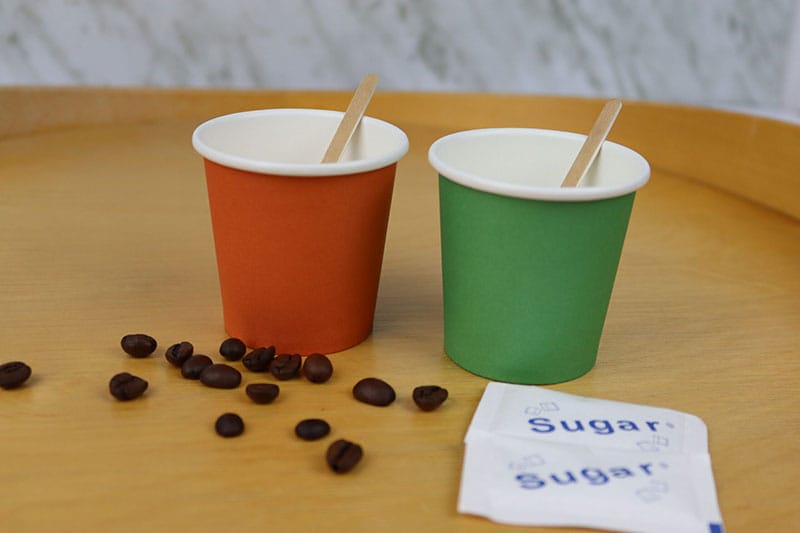
Expanded polystyrene (EPS) cups and containers are banned outright. Standard paper cups with PE lining remain permitted; however, they are subject to EPR obligations. Consequently, a higher plastic content leads to higher registration and contribution fees. Paper-dominant products with certified compostable coatings reduce EPR liability and de-risk future regulatory tightening.
If you are transitioning cups or containers, ask your supplier: are paper cups with PE lining compliant? Yes, permitted under current rules. But are they optimal? Not if a compostable-lined alternative is available and cost-comparable. Compostable-lined options future-proof your supply chain.
Good To Know:
Bio based plastics are also still regulated within EU policy discussions on products on the environment, plastic waste, recycled plastic, and the goal that all plastic packaging must be reusable or recyclable by 2030.
Ready to Transition to Compliant Suppliers?
Hello Straw holds full PEFC certification, HACCP accreditation, and EN 13432 compostability certification. We’re registered with EPR schemes across all major EU member states.
How to Evaluate Any Supplier
The Checklist You Need to Run First
Supplier compliance is now a commercial risk. Major retailers require compliance documentation from their supply chains. A supplier who cannot produce a current certification pack is a liability, not a partner.
The checklist below gives procurement teams a structured framework to evaluate any paper product supplier. Run it before shortlisting, not after. It takes 15 minutes and protects you from switching costs, audit failures, and retailer delisting.
When evaluating a supplier, ask for:
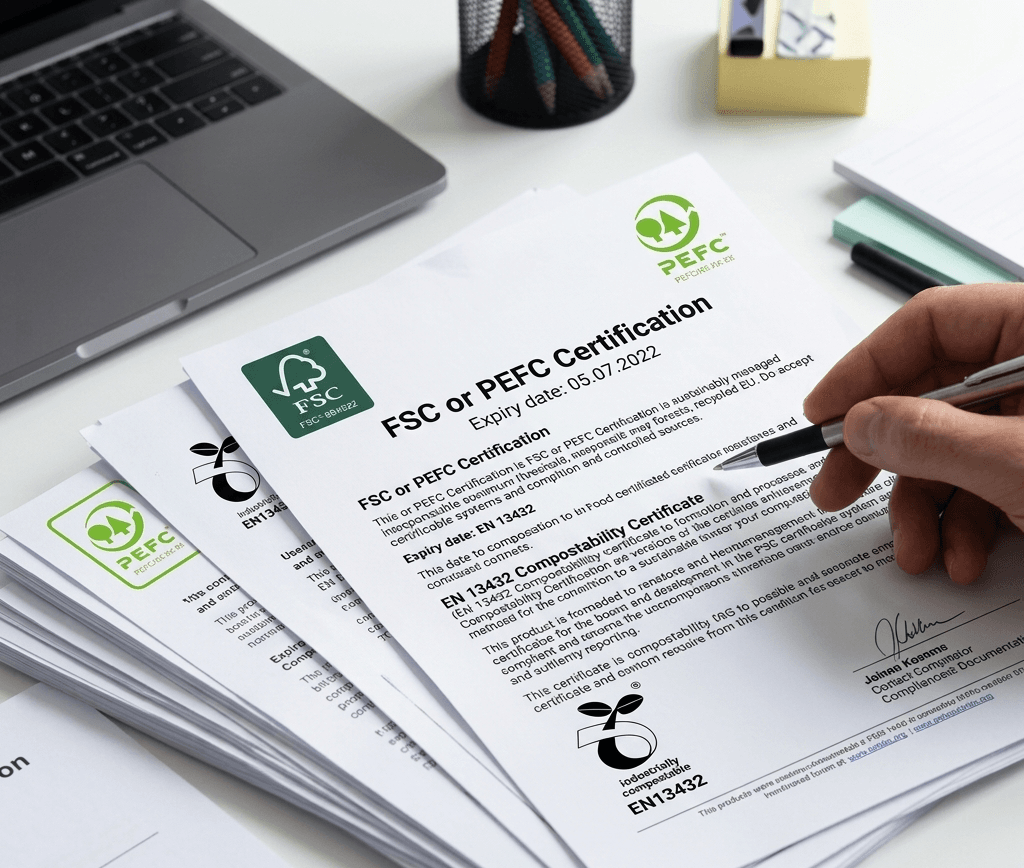
- FSC or PEFC Certification. “Can you provide your current FSC or PEFC certificate, including expiry date?” Responsible fibre sourcing is now a minimum threshold. Most EU and UK retailers require it as a listing condition. Do not accept verbal assurances. Require the certificate.
- EN 13432 Compostability. “Are your products certified compostable under EN 13432 or ISO 14851?” This is required for any compostability claim in the EU. Without certification, the claim is unsubstantiated and potentially a greenwashing risk that exposes you to retailer backlash.
- HACCP Food Safety. “Do you operate a HACCP food safety management system? Can you provide your documentation?” Required for all food contact materials, including straws and cutlery.
- EU Food Contact Compliance. “Do your products comply with EU Regulation 1935/2004 on food contact materials?” This is a legal requirement for any food-contact item in the EU and UK. Non-compliance creates product liability exposure for you, not just your supplier.
- PFAS-Free Documentation. “Can you confirm in writing that your products are PFAS-free?” PFAS restrictions are tightening rapidly across the EU. Pre-empt the requirement now to avoid switching costs later.
- Traceability and Origin. “Where are your raw materials sourced and processed? Can you provide chain-of-custody documentation?” EU buyers and retailers increasingly require supply chain traceability for ESG and sustainability reporting.
- MOQ Flexibility. “What are your minimum order quantities across your range?” Critical for testing new products and phased transitions without overcommitting stock. Low MOQs reduce switching risk.
- Lead Times and Safety Stock. “What is your standard lead time for repeat orders? Do you hold safety stock?” Supply chain continuity matters. Operators cannot afford stockouts on core service items.
- Compliance Documentation Pack. “Can you supply a compliance documentation pack for our procurement audit records?” You need this for your own audit file. It is also a signal of supplier professionalism.
Custom Branding. “Can you provide branded products? What are your MOQs for branded orders?” Relevant for hospitality chains and retail brands. Not all suppliers offer this at accessible volume thresholds.
A supplier who can answer yes to all ten criteria above is a reliable partner for your compliance journey.
Frequently Asked Questions
What is the EU Single-Use Plastics Directive and how does it affect my business?
The EU Single-Use Plastics Directive (Directive 2019/904) is EU legislation adopted in June 2019 that bans specific single-use plastic items from being placed on the market across all 27 EU member states. Main product bans came into force on 3 July 2021, and Extended Producer Responsibility obligations became active at the end of 2024. This means you likely need to transition your product sourcing now, if you haven’t already. Northern Ireland follows the full Directive under the Windsor Framework.
What compliant alternatives does Hello Straw offer?
Banned from 3 July 2021: plastic straws, cutlery, plates, drink stirrers, cotton bud sticks, balloon sticks, and EPS food containers. Hello Straw manufactures PEFC-certified paper straws (standard and aseptic formats for extended shelf-life applications), paper cutlery, and paper cups (single and double wall) — all compliant with EU SUP requirements and certified for food contact. Non-EPS cups and food containers face Extended Producer Responsibility obligations rather than outright bans, but Hello Straw’s products are engineered to minimize EPR exposure through compostable-lined options where available.
What are the penalties for non-compliance with EU single-use plastic regulations?
Penalties are set by each EU member state individually. For example, common consequences include product seizure, fines, and market withdrawal notices. In addition, retailers and hospitality groups are increasingly requiring supplier compliance documentation as a condition of trade. Consequently, non-compliance risks commercial delisting independently of formal regulatory enforcement.
Are compostable or biodegradable plastics exempt from the EU SUP Directive?
No. In fact, the Directive bans single-use plastic items regardless of biodegradability. Furthermore, its definition of “plastic” explicitly includes biobased and biodegradable plastics. Similarly, oxo-degradable plastics are strictly prohibited. However, non-plastic materials such as paper, wood, bamboo, metal, and glass remain fully exempt from the product ban provisions.
What certifications should I look for when buying paper straws?
Key certifications: FSC or PEFC (responsible fibre sourcing); EN 13432 or ISO 14851 (compostability, where applicable); HACCP (food safety); EU Regulation 1935/2004 compliance (food contact materials). PFAS-free documentation is increasingly expected by major retailers and foodservice chains as EU PFAS restrictions tighten. Hello Straw holds all of these certifications across our full product range.
How do I document compliance with the EU Single-Use Plastics Directive?
Build a compliance file containing: current supplier certifications (FSC/PEFC, EN 13432, HACCP), supplier declarations of conformity, EU food contact material compliance statements, and EPR registration confirmation where applicable. Retain all documents for audit purposes. Request updated documentation annually — certifications carry expiry dates. Use the supplier checklist above as a framework.
What is the EU packaging regulation 2026?
The PPWR is the new EU packaging regulation replacing the old Packaging Directive, applying from 12 August 2026. Unlike the SUP Directive, which bans specific items, PPWR sets sustainability requirements for all packaging. Specifically, it targets design for recyclability, PFAS restrictions on food-contact packaging, and reuse targets. As a result, your paper cup and cutlery suppliers must comply with both regulations. Therefore, from August 2026 onward, food-contact packaging must be completely PFAS-free, while all packaging must be designed for recyclability.
Now You Know What's Required. Here's What We Offer.
Hello Straw manufactures the full range of products covered in this guide straws, aseptic straws for extended shelf-life apps, paper cutlery, and sustainable food service packaging. All products are certified for food contact, EN 13432 compostable, and HACCP-certified.