
This guide walks through the five that come up most, with a straight answer to each. None of them is a dealbreaker once you know what to look for, and most share the same root, which is clear information from a supplier who knows the detail. The sections below give you exactly that, one worry at a time, so you can weigh the switch with a full picture.
The pain points at a glance
“I am not sure it is safe for the people I serve”
This is the quietest worry and the most common. A buyer fields questions from guests about allergens and hot drinks, and when the supplier has no clear answer, staying with what they know feels safer. The single highest-volume search on paper straws is whether they contain gluten, and almost nobody answers it.
- Share the full specification and allergen sheet for every product
- Choose cups built to hold heat, from coffee through to soup, without softening
- Point buyers to the right product for the job, rather than a one-size answer
Hello Straw: Our paper straws are made from food-grade paper, which comes from wood fibre, not wheat or grain, so gluten is not an ingredient. Our corrugated cup insulates well enough that a sleeve is usually not needed, which keeps service simple.
“I do not know what happens to it after use”
People want to do the right thing, and the labels confuse them. Recyclable, compostable and biodegradable sound similar and mean different things, in different bins. The fear of making a claim they cannot stand behind holds buyers back more than the product itself does.
- Explain the difference plainly, so the buyer can brief their own customers
- Match each product to the disposal route that customers genuinely have
- Keep on-pack wording honest and reduction-based, rather than absolute
Hello Straw: Our products use only a very thin water-based barrier, around 0.6 percent, which is what lets paper hold a drink. It is not a traditional plastic lining, and it is made to separate cleanly when the paper is repulped, which is how we help brands cut single-use plastic rather than simply claim it away.
“Paper products fall apart in real use”
Everyone remembers a straw that turned to mush halfway down a drink, and that one experience colours the whole category. The cause is usually weaker paper and a build that was not matched to the job, so it fails with heat, grease or the fizz of a carbonated drink.
- Match the fibre and wall structure to the setting, not to a generic spec
- Use rigid aseptic straws where drinks are carbonated or come in a juice box
- Test samples in your own setting before committing to volume
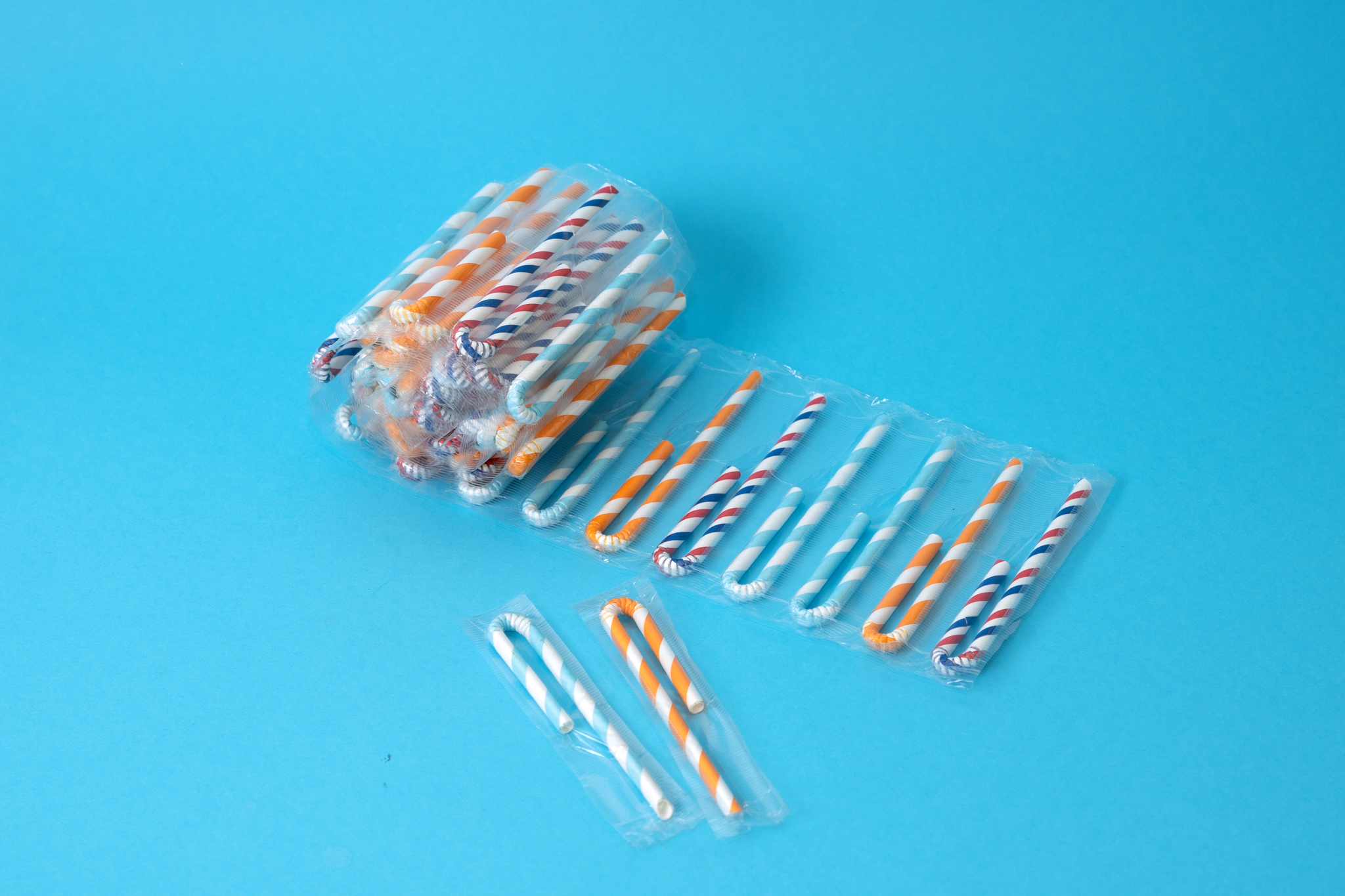
Hello Straw: Our aseptic line, including the U-Straw, is built to stay firm through the whole drink, which is why it holds up in juice boxes and fizzy drinks. A sample pack in your own setting tells you more than any spec sheet.
“Compliance keeps moving and I cannot keep up”
The rules are changing quickly, and the cost of getting them wrong is rising. PPWR, PFAS limits, EPR fees and the plastic packaging tax all land across 2026 and 2027, and each one touches packaging choices. Buyers worry about choosing something today that falls foul of a rule tomorrow.
- Build compliance into the product choice from the start, not as an afterthought
- Check each rule against your own products and markets
- Keep proof to hand, through certifications and clear documentation
Hello Straw: Our range is certified and chosen with these rules in mind, and our team is happy to walk through how PPWR, PFAS, EPR and the plastic tax apply to your products, so the choice feels settled rather than risky.

“The switch feels expensive and disruptive”
On unit price alone, paper can look dearer than plastic, and that first number is where many switches stall. What the number misses is the plastic tax, EPR fees and waste handling around it, and the worry that new packaging will create extra steps for busy staff or event crew.
- Compare total cost, with tax, fees and handling included, not just unit price
- Choose packaging that fits how the team already works, with no added steps
- Check that supply can meet your volume steadily across the EU and UK
Hello Straw: Once you weigh the plastic tax, EPR fees and waste handling, the cost gap narrows and often closes. We supply brands and events across the EU and UK, and we are glad to work through the real total cost for your range.
In short
The barrier to switching is rarely the product. It is the unanswered question behind it. Answer the safety, disposal, performance, compliance and cost worries clearly, and the switch stops feeling like a risk. The quickest way to see where you stand is the readiness checklist below.
See it in action
We share the range at real events across the EU and UK. Follow along on Instagram to see how it performs before you request a sample.
Frequently Asked Questions
Are paper cups and straws recyclable?
They are made from clean fibre that mills can repulp, so they are designed to be recycled where facilities accept them. The thin barrier dissolves in the repulping process.
Do paper cups contain plastic?
Ours carry only a very thin plant-based barrier, not a traditional plastic lining. It breaks down cleanly in composting and repulping, which is how we help brands cut single-use plastic.
What is the difference between recyclable and compostable?
Recyclable goes back into the fibre stream, compostable breaks down in the right composting conditions. They use different bins, so match the packaging to the disposal route your customers have.
Is sustainable packaging more expensive?
On unit price it can look dearer, but once you include the plastic tax, EPR fees and waste handling, the gap narrows and often closes. We can work through the real total cost with you.